Rotted Roof Decking in DeWitt: How to Spot It and When It Must Be Replaced
Table of Contents
DeWitt sits close enough to the Mississippi River that humidity lingers under asphalt shingles longer than it does in drier pockets of Iowa.
Mix that moisture with Clinton County’s brutal freeze-thaw winters, and you get the exact conditions that cause rotted roof decking to form quietly beneath a roof that still looks fine from the curb.
Most DeWitt homeowners never know their roof deck is compromised until a tear-off crew pulls the shingles and finds soft, dark-stained plywood underneath.
The good news: rotted roof decking is almost always detectable once you know what signs to look for, and catching it early keeps a routine roofing job from turning into a bigger repair bill.
Below is what actually drives the decking replacement cost per sheet, and how to spot trouble before a crew ever sets foot on your roof.
What Rotted Roof Decking Looks Like Once the Shingles Come Off
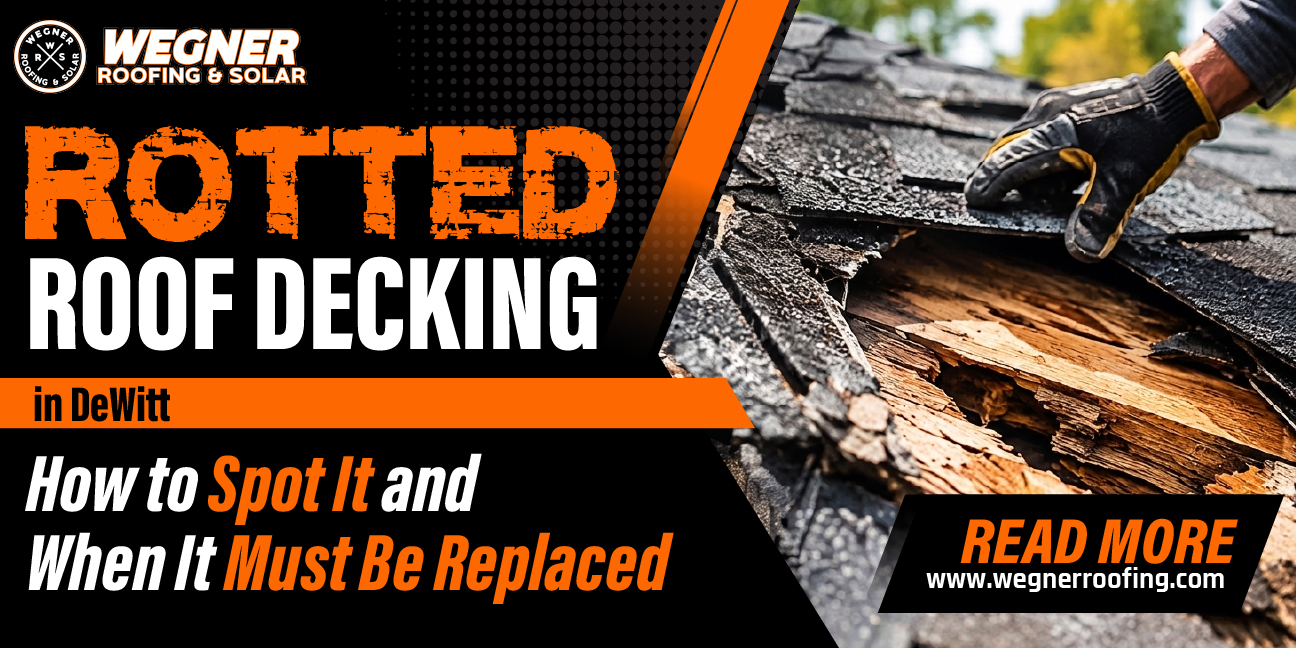
Rotted roof decking rarely announces itself before tear-off. Once shingles are stripped away, the signs are unmistakable and easy to identify:
- Dark, water-stained plywood or OSB sheathing.
- A spongy texture that gives under light pressure.
- Sheathing that has visibly separated into layers.
- Musty odor coming from the exposed deck.
This last sign, layered sheathing, is called delaminated sheathing, one of the clearest markers that water has been sitting in the wood for months, sometimes years, before anyone noticed.
Why DeWitt's Climate Accelerates Roof Deck Rot
Eastern Iowa’s freeze-thaw cycles are hard on roofing systems, and wood rot is often the direct result of ice dams that form along DeWitt eaves every winter.
Here’s how the cycle typically plays out:
- Snow melts on warmer roof sections and refreezes at colder eaves.
- Ice builds up and backs water beneath the shingle line.
- Trapped water slowly soaks into the plywood below.
- A 20-25 year old roof with poor ventilation speeds the damage.
Over several winters, this pattern makes rotted roof decking almost inevitable without intervention.

Warning Signs You Can Spot Before Tear-Off
You don’t need to climb onto the roof to catch early clues of rotted roof decking. Watch for:
- Sagging or wavy rooflines visible from the street.
- Dark stains or a musty odor in the attic.
- Daylight coming through the roof boards.
- Granules piling up in gutters near soft areas.
- Soft spots underfoot on roof surfaces during a walk-through.
A trained eye during a professional roof inspection can confirm suspected rotted roof decking before a single shingle comes off, giving you a clearer picture of the project ahead.
Not sure if your DeWitt roof has water-damaged wood hiding underneath? Contact Wegner Roofing & Solar for a free, no-obligation inspection before committing to any project.
What Happens When Crews Find Rotted Decking Mid-Job
Even the most thorough inspection can miss everything hiding beneath the surface.
Hidden rot found at tear-off is common on older DeWitt homes, especially in these trouble spots:
- Rot frequently hides in the vulnerable areas around chimneys and skylights.
- Water runoff naturally concentrates and causes damage along roof valleys.
- Ice dams and trapped moisture often lead to hidden rot near eaves and gutter lines.
- Water easily seeps in and degrades the wood underneath old, failed flashing.
When our crews uncover rotted roof decking during a full tear-off, we stop, take photos, and walk you through a change order for bad decking before replacing a single sheet. Nothing gets swapped out without your sign-off first.
Decking Materials: What Replaces the Rot
Once rotted roof decking is removed, it’s replaced with new sheathing rated for Eastern Iowa’s climate swings.
The plywood vs. OSB decking replacement decision usually comes down to a few factors:
- Budget and material availability.
- Moisture exposure in your specific roof area.
- Manufacturer specifications for your chosen shingle system.
- Long-term ventilation plans for the roof deck.
Both materials perform well when properly installed and ventilated, and either stops the rot cycle from repeating on your DeWitt roof.
Ready to stop roof rot before it spreads further? Request your free estimate today and get a written plan for your DeWitt roof.
Repair or Full Replacement, Making the Right Call
Isolated deck damage around a single vent or valley can sometimes be patched during a roof repair without a full tear-off. Consider full roof replacement instead when:
- Rot has spread across multiple roof sections.
- Your roof is already nearing 20 years old.
- You’ve had repeated leaks tied to the same area.
- Ventilation issues are causing repeat moisture buildup.
Patching over widespread structural rot only delays a bigger, costlier failure down the road.
Key Takeaways
Rotted roof decking usually stems from trapped moisture, ice dams, or aging shingles.
Warning signs include soft spots, sagging, attic stains, and daylight through roof boards.
Decking replacement cost varies based on how many sheets need replacing.
Rot discovered mid-tear-off requires a documented change order before work continues.
A professional inspection is the most reliable way to catch rotted roof decking early.
Protecting Your DeWitt Home Starts With Knowing What's Underneath
Damaged decking doesn’t fix itself, and ignoring it only raises the eventual repair bill.
DeWitt’s river humidity, winter ice dams, and aging housing stock make this one of the most common surprises homeowners face mid-project.
The best defense is catching it early with a professional set of eyes before small rot turns into a structural problem.
Don’t let hidden roof damage catch you off guard this winter. Schedule your free inspection with Wegner Roofing & Solar today and get a clear, honest report on what’s really under your shingles.
See what your neighbors are saying on the Wegner Roofing & Solar Google Business Profile.

FAQs About Rotted Roof Decking in DeWitt, IA
How do you know if a DeWitt roof has rotted decking before tear-off?
Look for sagging rooflines, musty attic odors, daylight through roof boards, or soft spots when walking the roof.
A professional inspection with moisture readings confirms suspected decking issues before tear-off ever begins.
Will insurance pay for rotted decking found mid-job?
Insurance often covers rotted roof decking only when it results from a covered storm event, not general wear or age.
Photo documentation during tear-off helps support a claim, but neglect-related rot is rarely covered.
Can rotted decking be patched instead of replaced?
Small, isolated pockets of damaged wood around a vent or valley can sometimes be patched during a repair.
Widespread or structural rot requires full replacement, since patching over compromised sheathing doesn’t restore the roof’s strength.
Table of Contents
Drip Edge Installed Wrong on a DeWitt Roof? Signs, Damage, and Fixes Table of Contents DeWitt sits between the Wapsipinicon and Mississippi River valleys, where
Soft Spots on a DeWitt Roof: What Spongy Decking Means After Derecho Season Table of Contents DeWitt’s 2026 derecho season pushed straight-line winds through the
Loose Shingles After a DeWitt Windstorm: Why They Lift and What Repair Costs Table of Contents A gust rolls off the fields along Lincoln Highway
Rotted Roof Decking in DeWitt: How to Spot It and When It Must Be Replaced Table of Contents DeWitt sits close enough to the Mississippi
Zero-Down Roof Replacement in DeWitt, IA: How Eastern Iowa Homeowners Finance With No Out-of-Pocket Table of Contents DeWitt homeowners got a hard lesson in storm