Table of Contents
If you’re comparing the cost of a standing seam vs. corrugated metal roof in DeWitt, IA, the short answer is that standing seam costs roughly 30% to 50% more per square.
This price gap comes down to material thickness, fastening methods, and labor time.
Clinton County’s freeze-thaw winters, spring hail, and straight-line winds test every roof.
While both metal systems handle this rough weather beautifully, they serve different primary purposes.
Corrugated exposed-fastener panels are an excellent, durable choice for machine sheds and pole barns.
In contrast, standing seam is the premium step-up homeowners choose for a residential home they plan to keep for decades.
Neither choice is wrong, but understanding the real cost difference between these panel types is critical for setting your budget.
This guide breaks down exactly where that price gap comes from, so you can approach your upcoming estimate with clear expectations.
Why Standing Seam Costs More Per Square in DeWitt, IA
When evaluating a standing seam vs. corrugated metal roof, you’ll immediately notice the design difference.
Standing seam panels lock together with raised, concealed seams instead of exposed screws.
That system takes more time to fabricate, cut, and install correctly, which drives the standing seam price per square higher than a basic ag panel.
The payoff is a roof with no fastener holes to loosen or leak over decades.
Here’s what adds to that cost:
- Concealed-fastener seams require specialized crimping tools and trained installers.
- Panels are cut and formed to tighter tolerances for a clean, watertight lock.
- They require more labor hours per square than screw-down panels.
- Premium finishes and heavier steel gauges add to material cost.
What Drives Corrugated (Exposed-Fastener) Panel Cost
Exposed-fastener panels, sometimes called corrugated or ag panels, screw directly through the panel face into the decking or purlins.
That simpler installation is exactly why exposed-fastener panel cost stays lower than standing seam across Eastern Iowa.
Common cost factors on this system include:
- Panels screw straight to the structure, cutting installation time significantly.
- Lower material cost per square foot of steel.
- Fewer trim and flashing details on simple pole barn or outbuilding rooflines.
- A common, economical choice for machine sheds and ag buildings across Clinton County.
Wondering how these numbers actually shake out for your roof? Wegner Roofing & Solar will price both panel types side by side on your actual DeWitt building, not a generic estimate, so you can see exactly what the difference costs you.
Metal Panel Gauge and Labor Costs Add Up Fast
When weighing a standing seam vs. corrugated metal roof, panel thickness (or metal panel gauge) plays a bigger role in price than most homeowners expect.
Panel thickness, or metal panel gauge, plays a bigger role in price than most homeowners expect.
A 24-gauge standing seam panel resists denting from hail impacts better than a lighter 26- to 29-gauge exposed-fastener panel, but that added thickness costs more in raw material and takes more effort to form on site.
Labor is the other half of the equation. Metal roof installation costs in Eastern Iowa shift depending on roof pitch, architectural complexity, and how many valleys, dormers, or chimneys require custom flashing.
A concealed fastener roof simply takes more skilled labor hours to install correctly than a panel that screws straight down, and that labor gap shows up on your final invoice.
A few things that stretch labor time on either system:
- Steep or complex rooflines with multiple planes.
- Valleys, skylights, and chimney penetrations requiring custom flashing.
- Full tear-off of an existing roof versus a qualifying overlay.
- Trim and edge detail work that keeps the roof watertight for decades.
Which Panel Fits Your DeWitt Roof
The right choice depends less on price alone and more on what the building needs to do for the next few decades.
For a broader breakdown of panel types, warranties, and lifespan expectations, the DeWitt, IA Metal Roofing Guide covers the full picture beyond just pricing.
When to Buy a Standing Seam Roof:
- You’re staying in the home long-term and want to buy the roof once.
- You prefer clean lines with no visible fasteners.
- The building is a primary residence in town or on an acreage.
Who Should Opt for Corrugated Panels:
- You’re covering a pole barn, machine shed, or outbuilding.
- Budget and install speed are the priority.
- The structure doesn’t need a premium finished appearance.
Homeowners across DeWitt have shared their experience with Wegner’s crews directly.

You can read those reviews on our Google Business Profile before scheduling your own estimate.
Not sure which panel makes sense for your specific roof? A short conversation with Wegner Roofing & Solar’s team clears up more than any online price chart can.
It costs nothing to ask, and we’ll help you find the exact right fit for your property.
Key Takeaways
Standing seam costs more per square due to concealed fasteners, tighter tolerances, and heavier gauge steel.
Exposed-fastener panels cost less and install faster, making them the standard for pole barns and outbuildings.
Panel gauge and labor complexity both push the price gap wider between the two systems.
The right choice depends on whether the building is a long-term home or a utility structure.
One Roof, One Decision That Pays Off for Decades
The gap between standing seam and exposed-fastener pricing isn’t arbitrary.
It reflects real differences in material thickness, installation skill, and how long each system is built to last on a DeWitt roof.
Homeowners planning to stay put often find the extra upfront cost of standing seam pays for itself by skipping future replacements, while pole barn owners get exactly what they need from a simpler exposed-fastener system.
Ready to see real numbers instead of estimates from a chart? Call Wegner Roofing & Solar or request your free written estimate today, and get a side-by-side price comparison built from your actual roof, not a guess.

FAQs About Standing Seam vs. Corrugated Metal Roofs
Why is standing seam more expensive than corrugated?
Standing seam costs more because concealed fastener seams require precision forming, specialized tools, and more labor hours than a corrugated panel that simply screws down.
Heavier gauge steel and premium finishes on standing seam systems also add to material costs compared to basic exposed-fastener panels.
Do exposed fasteners fail sooner?
Exposed fasteners can loosen over time as screws work through thermal expansion and contraction cycles, eventually needing tightening or replacement.
Standing seam’s concealed fasteners avoid this issue entirely, which is one reason standing seam lasts toward the higher end of metal’s lifespan.
Which metal panel is better for hail?
Heavier gauge standing seam panels generally resist hail denting better than lighter exposed-fastener panels, though both outperform asphalt shingles significantly.
Homeowners choosing shingles instead should look at impact-resistant roofing for comparable Class 4 hail protection.
Table of Contents
Do Metal Roofs Prevent Ice Dams in Iowa? Table of Contents If you live in DeWitt, IA, you know our Clinton County winters deliver dozens
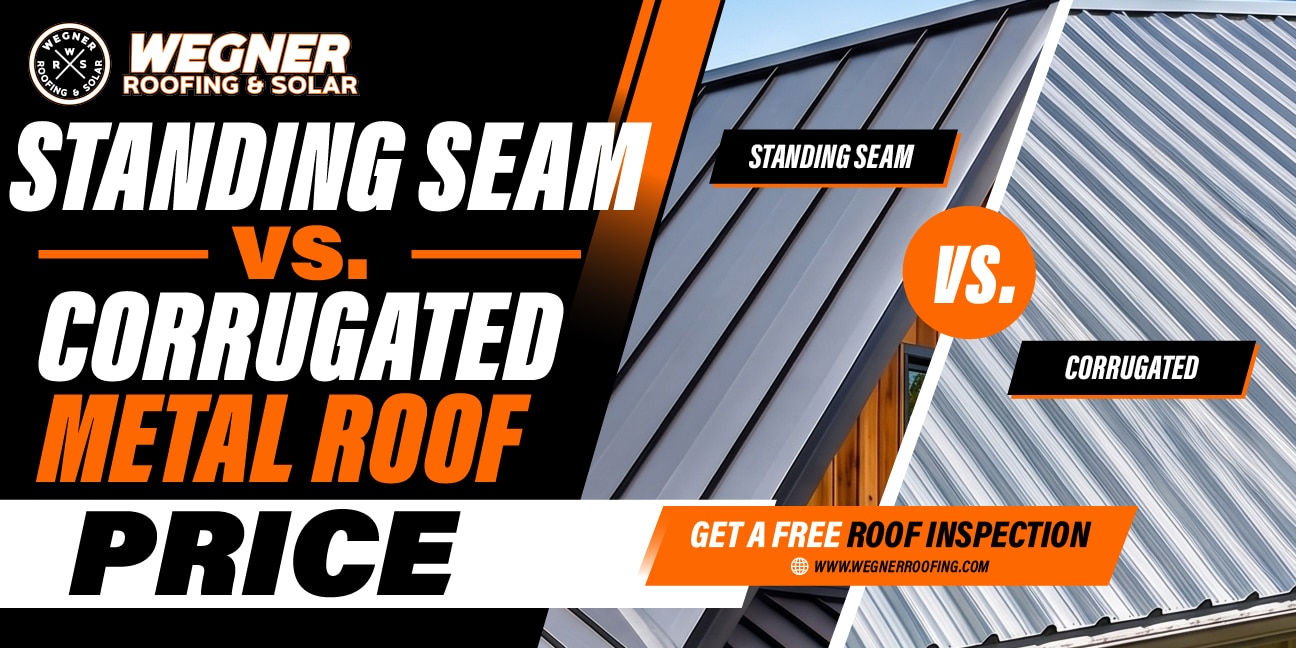
Standing Seam vs. Corrugated Metal Roof Price Table of Contents If you’re comparing the cost of a standing seam vs. corrugated metal roof in DeWitt,
Drip Edge Installed Wrong on a DeWitt Roof? Signs, Damage, and Fixes Table of Contents DeWitt sits between the Wapsipinicon and Mississippi River valleys, where
Soft Spots on a DeWitt Roof: What Spongy Decking Means After Derecho Season Table of Contents DeWitt’s 2026 derecho season pushed straight-line winds through the
Loose Shingles After a DeWitt Windstorm: Why They Lift and What Repair Costs Table of Contents A gust rolls off the fields along Lincoln Highway